Vehicle Jack Safety


Written by Jon Vorisek | Reviewed for accuracy by Lawrence Valerio on January 11, 2026

Vehicle jacks support an incredible amount of weight distributed across a small surface area. Appropriate placement and support are needed to ensure stability and avoid a catastrophe.
Always utilize the designated lifting points on the vehicle. Only place the jack (and any axle stands) on a hard, level surface like a concrete repair shop floor.
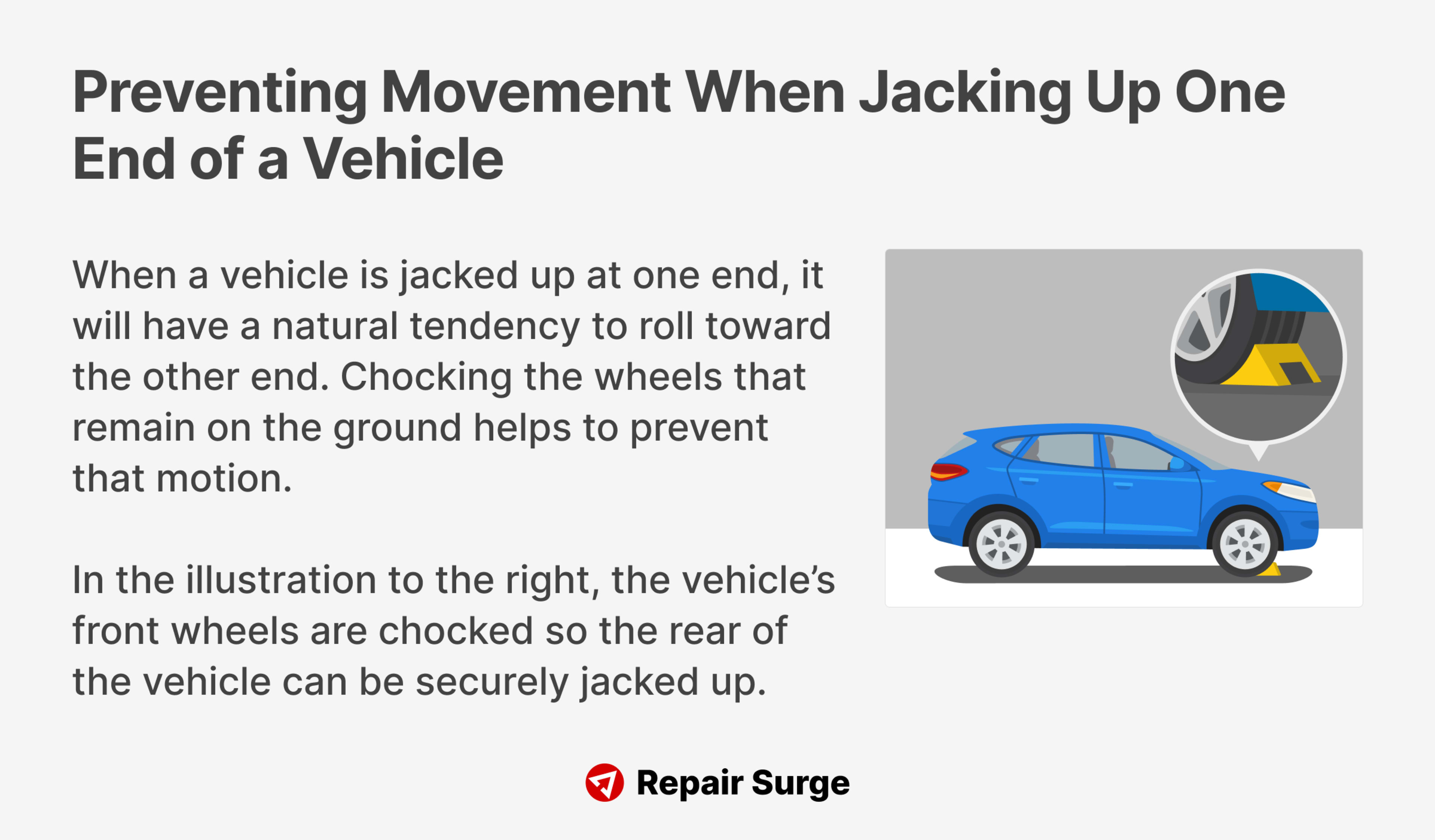
If only one end of the vehicle will be lifted, chock the wheels that remain on the ground to prevent them from rolling. The chocks should be placed in front of the front wheels or behind the rear wheels.
Never go under a vehicle that's supported only by a jack. According to the NHTSA, it's very possible for the jack to give out, meaning you could be crushed under the vehicle. If you need to go under the vehicle, make sure it's securely supported with multiple stands or ramps that are rated for the weight of the vehicle.

Cinder blocks, metal drums, bricks, or any other unconventional objects should never be used to support the weight of a vehicle.
According to Autozone, it's not safe to leave a vehicle up on a jack for an extended period of time (like overnight). Jacks are only meant for temporary lifting. Other support devices rated for the weight of the vehicle should be used if longer-term support is needed.
Jon Vorisek is the Founder and CEO of Repair Surge, which provides OEM-based repair information to DIY mechanics and professional service technicians. He has a passion for creating software that helps people fix cars safely and effectively.
Lawrence Valerio is an ASE Master Automobile Technician and an experienced shop manager. He started working on cars at seven years old while learning from his father. He enjoys spending time under the hood and training others in the skills needed to work on today's vehicles.