Ladder Safety


Written by Jon Vorisek | Reviewed for accuracy by Lawrence Valerio on January 11, 2026

Using a ladder means being elevated on a narrow, potentially unstable surface. Any unexpected shift or loss of balance can result in gravity taking hold, causing serious injury.
Check the ladder's condition
Always make sure portable ladders are equipped with rubber non-skid pads. Ladders that are missing these pads pose a grave safety hazard.

According to the California Department of Industrial Relations, you should never use a ladder with defects like loose rungs or cracked or split side rails. Clean the rungs of the ladder of any grease or dirt before using it in the repair shop.
Using a ladder safely
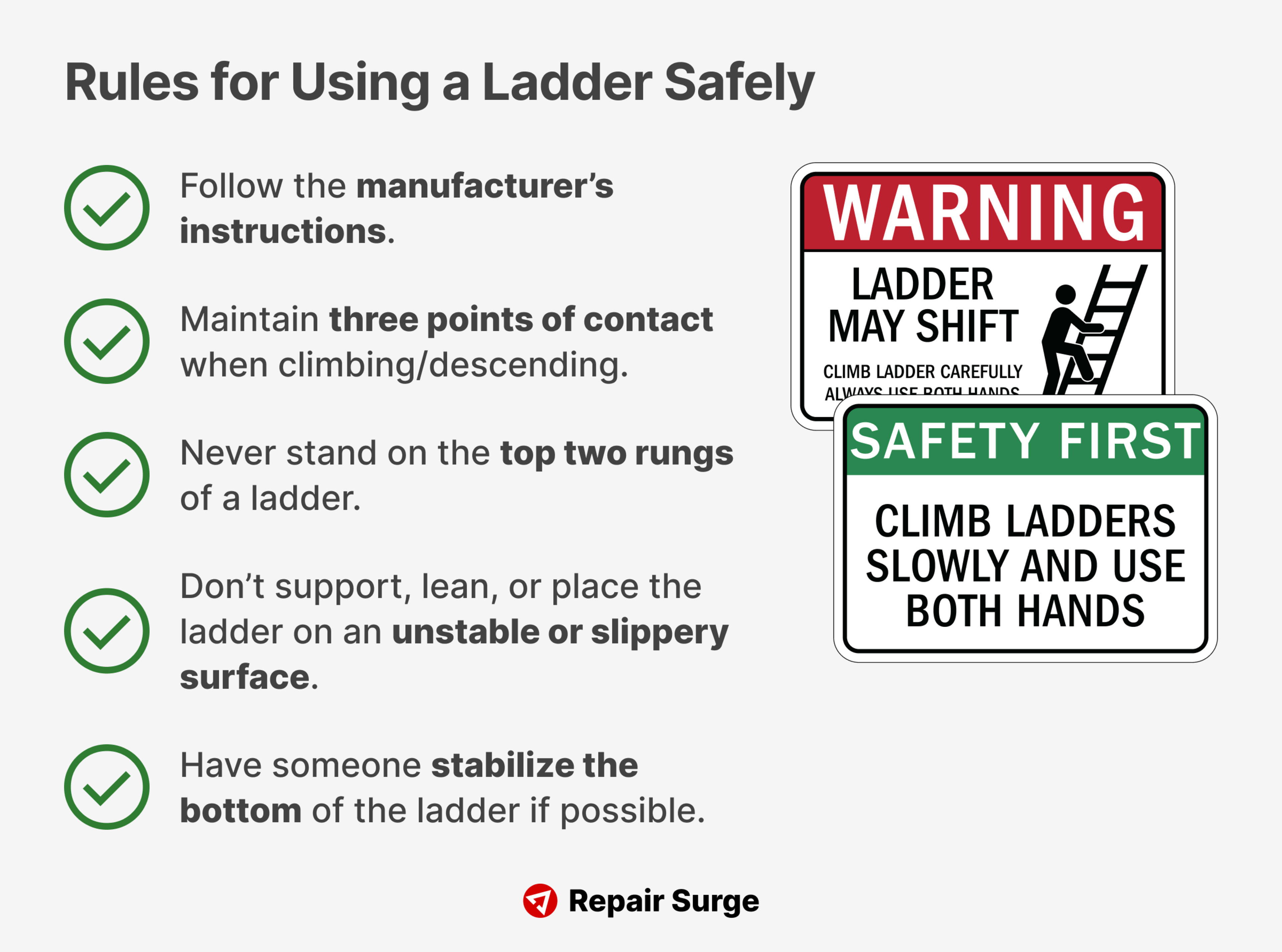
Most ladder manufacturers provide instructions for use. A quick online search is usually an easy way to locate this information. For example, Gorilla provides guides and other resources for their ladders online.
Keep both hands and at least one foot on the ladder at all times when climbing or descending. Never stand on the top two rungs of a ladder.
Don't support extension ladders against piles of boxes, other ladders, or any unstable surfaces. Never place ladders on plastic sheeting or other slippery surfaces.
It can be helpful to have someone support the bottom of the ladder. This adds stability and reduces the chances of the ladder moving unexpectedly.
Jon Vorisek is the Founder and CEO of Repair Surge, which provides OEM-based repair information to DIY mechanics and professional service technicians. He has a passion for creating software that helps people fix cars safely and effectively.
Lawrence Valerio is an ASE Master Automobile Technician and an experienced shop manager. He started working on cars at seven years old while learning from his father. He enjoys spending time under the hood and training others in the skills needed to work on today's vehicles.